Glyphory: A memory game
Glyphory, a mix of glyphs and memory, is a memory game in which the poster plays along. Every card that is turned over appears on the poster as a moving name, and the variable typeface HGKB Ruder Plakat LL by Lineto reacts to the game: its letters stretch, wave or drip depending on the move. The result is a type specimen that can only be seen by playing it.
HGKB Ruder Plakat LL
Font Choice
For Glyphory I chose the variable typeface HGKB Ruder Plakat LL by Lineto. A memory game lives from change: cards are turned over, pairs are found, mistakes are made. I was looking for a typeface that can show these moments through its own form, and Ruder Plakat can. The typeface has three axes that can each be changed independently: the uppercase height, the lowercase height and the length of the descenders. This gave me a separate gesture for each state of the game. A name stretches upwards when a card is opened, the letters of Bingo! rise one after the other like a wave, and the descenders of Try Again! drip downwards like a small failure. In this way the same letters can be curious, happy or disappointed, depending on the move.
A poster typeface
Ruder Plakat is made for posters: bold, compact and strong at large sizes. In my game the letters often fill the whole poster, so they need to stay clear and readable from a distance, even while they are moving. Its heavy black forms also work well with the strict black-and-white palette, the two halves and the flickering of the result.
Glyphs as game pieces
Instead of pictures, my cards show glyphs from the typeface itself. The asterisk, cent, at sign, degree, lozenge, currency sign, radical and yen have very different shapes, so the players can tell them apart quickly. At the same time they show a side of the typeface that is rarely seen. The cards become a small collection of its special characters, and the game turns into a way of discovering the typeface.
Performance
Elements of the moving poster
Elements of the moving poster
Elements of the moving poster
Game structure & setup
The setup
Glyphory is played at a table with sixteen cards, which form eight pairs. Instead of pictures, each pair shows one of eight glyphs from the typeface: the asterisk *, the cent ¢, the at sign @, the degree °, the lozenge ◊, the currency sign ¤, the radical √ and the yen ¥. Next to each glyph sits a small printed code (an AprilTag), and the two cards of a pair share the same code. A camera watches the cards and recognises every card the moment it is turned face up. On the screen there are two squares side by side: on the left the live picture of the camera, so the players can see what the camera captures and on the right the poster, which reacts to the game.
The start
Before the game begins, the poster shows a grid of nine fields. Eight of them hold the eight glyphs of the game, growing and shrinking in their uppercase height; in the middle field it says let’s play!. After a few seconds a countdown follows: 1, 2, 3, each number filling the whole poster. Then the game starts.
Waiting
As long as no card is open, the poster cycles quickly through the eight glyphs, one after the other, each as large as the poster allows. This is the resting state of the game, and the poster returns to it after every round.
The first card
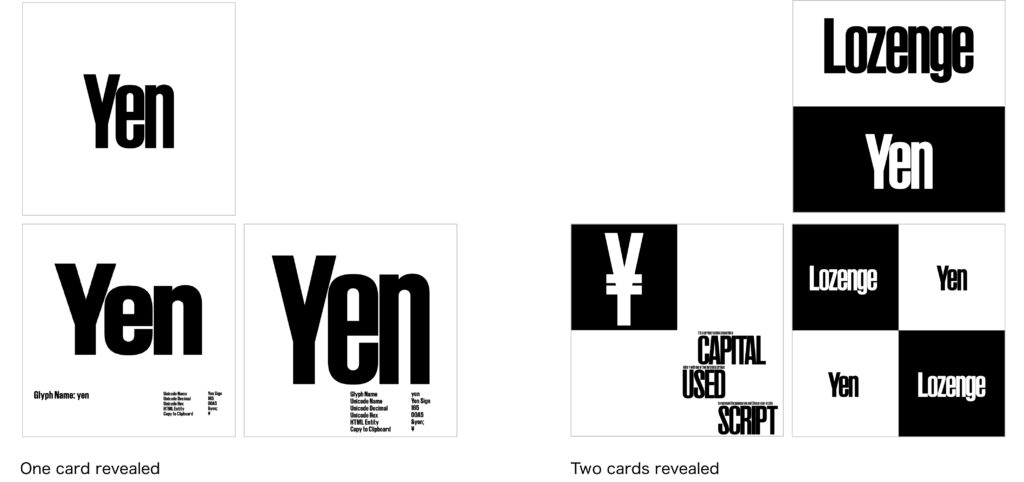
As soon as a player turns over a card, the poster shows the name of its glyph, for example asterisk or lozenge, written in lowercase. The name stretches slowly upwards and back again, using the uppercase height of the typeface.
The second card
When the second card is turned over, the poster splits into two halves: the name of the first card on a white half at the top, the name of the second card on a black half at the bottom. If the two cards belong together, both names stretch at the same time, like one movement. If they don’t, the names move against each other: when one grows, the other shrinks.
The result
After three seconds the poster gives its verdict, again for three seconds, with black and white flickering in the background:
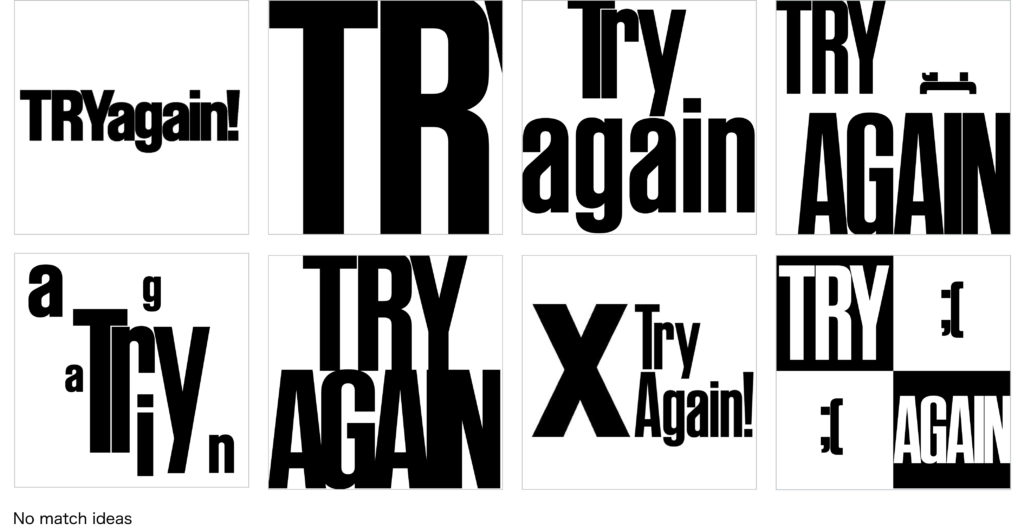
Bingo! for a matching pair. The letters stretch one after the other like a wave. Try Again! for cards that don’t match. The capitals stay tall while the descenders of the y and the g drip downwards. Every round runs to the end, even if the players turn the cards back early. Then the poster returns to the waiting glyphs. A pair that has been found can stay face up on the table, because the camera ignores it from then on.
The end
Once all eight pairs have been found, the grid from the beginning returns, and the middle field now says well played!.
Brainstorming
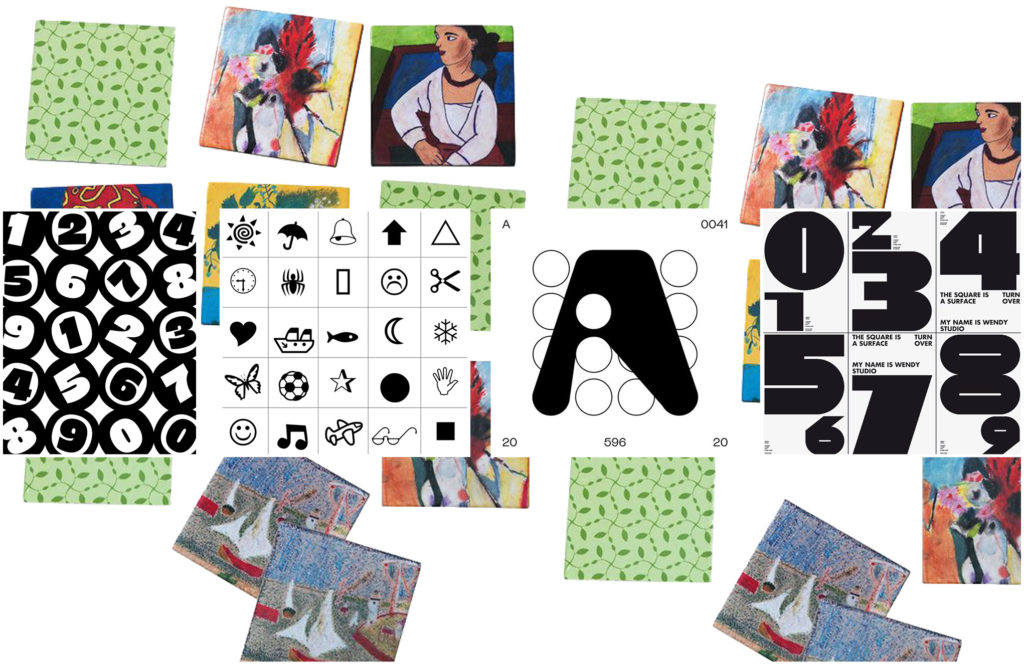
Moodboard Visual
Behind the scenes” (oftmals auch Making-of oder BTS genannt) bezeichnet in Film und Fernsehen den nicht-öffentlichen Bereich der Produktion sowie Dokumentarfilme oder Zusatzmaterial, das die Entstehung eines Werkes zeigt
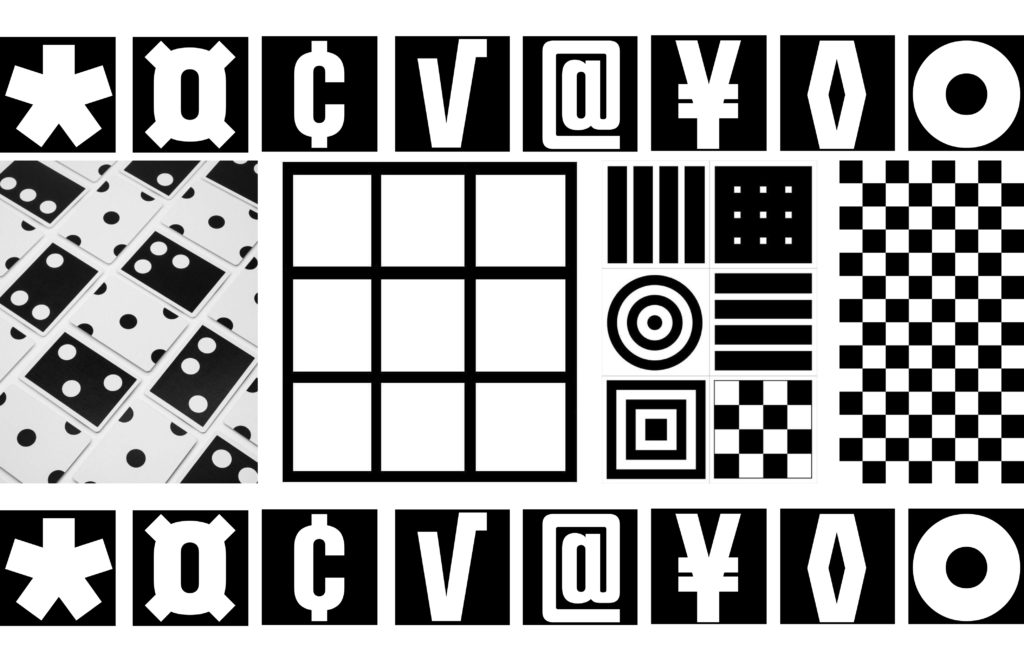
Moodboard Performance
Behind the scenes” (oftmals auch Making-of oder BTS genannt) bezeichnet in Film und Fernsehen den nicht-öffentlichen Bereich der Produktion sowie Dokumentarfilme oder Zusatzmaterial, das die Entstehung eines Werkes zeigt
Development process
Card Design
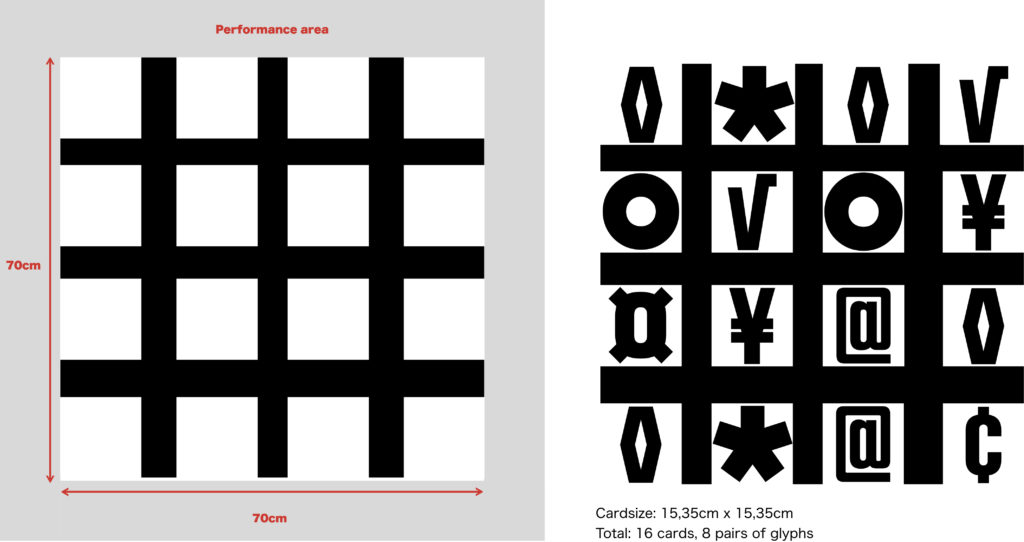
Behind the scenes” (oftmals auch Making-of oder BTS genannt) bezeichnet in Film und Fernsehen den nicht-öffentlichen Bereich der Produktion sowie Dokumentarfilme oder Zusatzmaterial, das die Entstehung eines Werkes zeigt
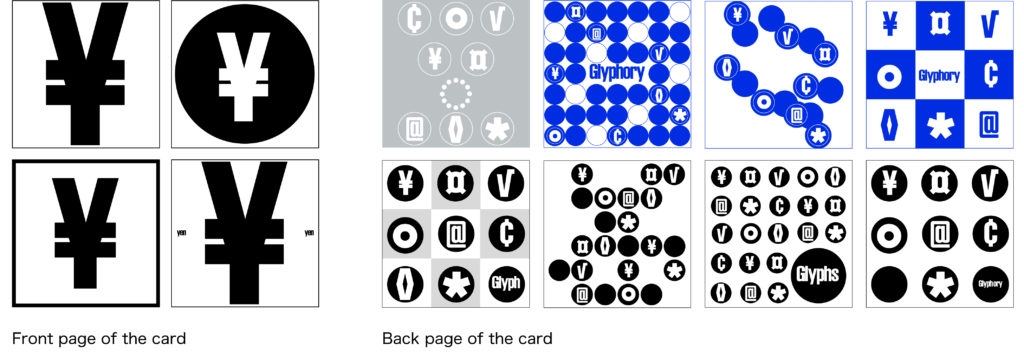
Poster Design Sketches
Behind the scenes” (oftmals auch Making-of oder BTS genannt) bezeichnet in Film und Fernsehen den nicht-öffentlichen Bereich der Produktion sowie Dokumentarfilme oder Zusatzmaterial, das die Entstehung eines Werkes zeigt
Behind the scenes” (oftmals auch Making-of oder BTS genannt) bezeichnet in Film und Fernsehen den nicht-öffentlichen Bereich der Produktion sowie Dokumentarfilme oder Zusatzmaterial, das die Entstehung eines Werkes zeigt
Behind the scenes” (oftmals auch Making-of oder BTS genannt) bezeichnet in Film und Fernsehen den nicht-öffentlichen Bereich der Produktion sowie Dokumentarfilme oder Zusatzmaterial, das die Entstehung eines Werkes zeigt
Challanges
Behind the Scenes
Front-Facing Setup
Front-Facing Setup
Front-Facing Setup